PMQ Pizza
Why Value Deals Are More Important Than Ever—and How to Make Them Profitable
Value-deal strategy playbook for independent and chain operators — addresses profitability tension in a competitive pricing environment.
194 stories · last 30 days by relevance
Value-deal strategy playbook for independent and chain operators — addresses profitability tension in a competitive pricing environment.
Stadium sponsorship extends brand visibility but is local/regional play with limited operational insight for chains managing 25+ locations nationally.
Local sports sponsorship is brand marketing; not a multi-location operator play.
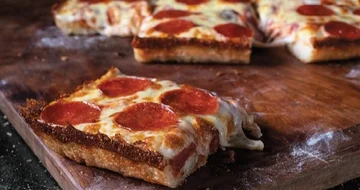
Licensed entertainment venue opening in 2027 using QSR format — novelty pop-up with no governance or scaling lessons for established chains.

A divestment or portfolio restructuring in a single market — watch the announcement for strategy signals, but this alone doesn't affect multi-location operators outside that region.
Founder re-engagement with struggling brand post-sale — illustrates challenges of turnarounds in pizza segment but limited actionable signal for other chains.
Retro-concept test shows format refresh can drive traffic — worth watching if it expands as a system-wide positioning lever.
Premium pizza LTO is a promotional tactic; no data on pricing strategy impact or multi-unit rollout plans.

Small regional pizza chain exits a state — illustrative of ongoing franchise portfolio pressures but limited signal for national multi-unit operators.
Routine menu addition with no strategic insight — unless the lede buries delivery, tech, or multi-unit rollout news, this is promotional fluff.
Single market growth story — only relevant if you're evaluating Ohio expansion or studying Mellow Mushroom's unit strategy.
Local pizza chain's two-unit expansion in Connecticut — no insights for multi-location brand operators.
Founder argues against knee-jerk cost-cutting in downturns — signals that operational resilience, not margin preservation alone, matters to multi-unit operators navigating inflation and labor pressure
Small regional acquisition (five units) — minimal signal unless Hoogland is a growth franchisee worth tracking.
Single independent pizzeria's direct-ordering strategy shows viable DoorDash alternative, but lacks multi-location scale or replicability data.
One local pizza chain files for a new location in a regional development — no chain-wide or material expansion signal.
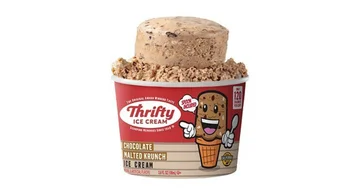
Viral novelty LTO (garlic-herb ice cream) — attention-grabbing but no operator takeaway on economics, loyalty, or scaling strategy.

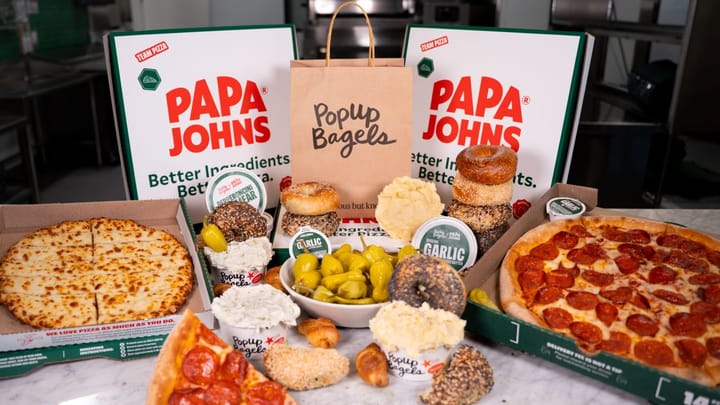
Limited co-brand promotion with a bagel vendor — tactical novelty marketing without broader operator insight.
Single emerging brand franchise launch; no evidence of scale, unit count, or multi-location operator relevance.
Supplier expansion to bar-and-grill chains — ingredient sourcing news with limited operator insight beyond awareness of ingredient availability.
Franchisee expansion of an existing brand signals unit-level growth appetite but lacks system-wide or strategic detail.
Boston Pizza expanding renovations and new units in Canada — single-market franchisee/investor news with no cross-border or strategic signal.
Indie pizza survival tactics against national value offers — niche advice for single-location or very small chains, not applicable to 25+ unit operators.
Local Chicago expansion by a single pizza brand using celebrity investor interest—not a scalable model or trend signal.
Single franchisee-led unit opening in new state — routine growth announcement without broader chain or system impact.
Single small chain opening two locations (delivery-only and airport venue) — limited scale and no replicable model signal for multi-location operators.

Generic tech-stack audit article from pizza trade publication — vendor-adjacent content with no named case studies or actionable benchmarks.
Menu add-on to a single/regional pizza brand — insufficient scale or insight for multi-location chain decision-makers.
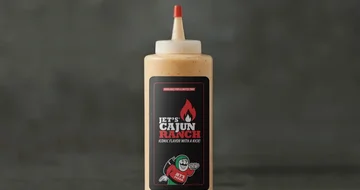
New sauce launch — tactical product news with no multi-location operator takeaway.
Mid-level promotions at one brand with no context on strategy or impact — insufficient detail for operator decision-making.
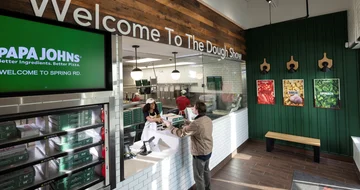
Single-location success story through word-of-mouth and product quality — inspiring but not actionable for multi-location brand operators evaluating marketing ROI.
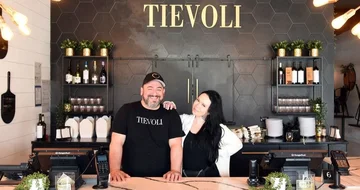
Single-brand scaling story with no operational insight — relevant only if you're studying that specific franchise's expansion playbook.
Single-brand menu item return — tactically sound for a take-and-bake operator but no broader signal for multi-location chains.
Movie tie-up LTO with no detail provided—routine brand-partnership promo with no strategic takeaway.
Single-location international expansion — no direct insight for multi-unit U.S. operators, though it signals brand confidence in geographic growth.
Single-location franchisee recruitment — routine activity without chain-wide development strategy.
Routine pizza chain promotional pricing — no broader operator insight on traffic drivers, delivery mix, or competitive positioning.

LTO menu return driven by guest demand — tactical offering with no broader chain or category signal.
Single-location pizzeria promotional news with no signal for multi-unit operators.
Routine pizza chain promotional offer — listicle format with no broader operator insight.
Regional brand's geographic expansion — limited relevance outside Quebec context.
Routine promotional tie-in with no strategic insight for multi-location operators.
Unnamed pizza chain kids-promotion — routine seasonal offer with no brand identity or broader signal for multi-location operators.
Single-location state entry is routine franchise expansion activity with no systemic insight for multi-location brand strategy.