The restaurant industry is stagnant right now
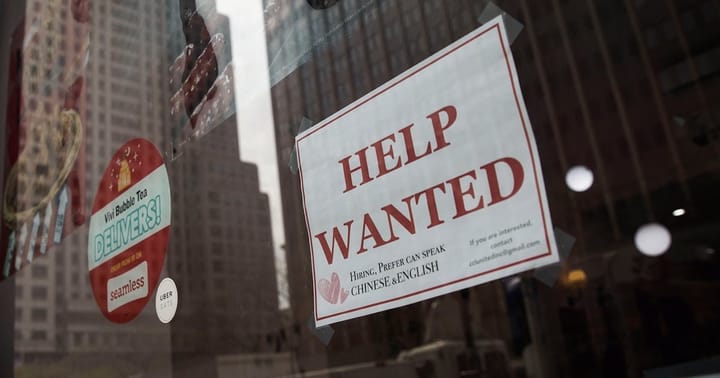
The restaurant industry is experiencing weak hiring, which signals potential market saturation.

54 stories · last 30 days by relevance
The restaurant industry is experiencing weak hiring, which signals potential market saturation.

Full-service restaurants face mounting staffing challenges as legal labor pathways become unclear, compounding existing pressures from volatile demand and turnover.

Nation's Restaurant News reports on restaurant industry headwinds including mass closures and job losses, alongside Jersey Mike's planned IPO and recent employment data.
Job cuts are occurring across retail and restaurant chains, according to new employment data.
Golden Corral's senior director of franchise business development, Dan Doulen, will speak at the QSR Evolution Conference; he brings over two decades of franchising experience, including prior roles a

A restaurant manager reflects on how generic praise like 'good job' misses an opportunity for more meaningful employee recognition that acknowledges specific effort or skill.

QSR Magazine argues that front-of-house labor retention is critical for restaurant operations.
A Cape Town Spur franchise is facing labour abuse allegations, highlighting potential compliance risks within the quick-service restaurant franchise model.
Food service and drinking establishments cut nearly 33,000 jobs in June after a hiring surge earlier in the summer, signaling potential softness in consumer demand or seasonal labor adjustments in the

A restaurant leadership podcast argues that indiscriminate agreement from hospitality leaders drives burnout and suggests that setting organizational boundaries at all levels can help protect leadersh
The National Restaurant Association expects restaurants and bars to hire fewer workers this summer amid a stagnant market.

Pending Senate legislation aims to expedite union organizing processes in the workplace.

A Binghamton, New York operator built a five-concept portfolio within one block after acquiring a university bar at age 21 through seller financing, suggesting that owner-operator experience and geogr
Sacramento sushi chain Mikuni settled a lawsuit with former employees for $2.25 million, signaling ongoing wage-and-hour compliance risks for regional restaurant operators.
Starbucks is creating thousands of new coffeehouse coach positions to expand in-store leadership, promoting most from within existing staff; the company reports that stores with coaches have shown imp

7shifts released findings on restaurant employee priorities for 2026, signaling where operators may need to focus retention and management efforts.
Jack in the Box's turnaround effort is being pressured by inflation and California labor costs, signaling broader challenges facing QSR operators managing profitability in a cost-intensive environment
California is requiring major restaurant chains to disclose allergen information on menus starting Tuesday, signaling a shift toward transparency that may reshape how operators label and communicate f
A podcast episode featuring a steakhouse general manager discusses leadership practices and financial systems that distinguish high-performing restaurant managers from average ones.
California has enacted a law requiring chain restaurants to label allergens on menus.
Restaurant summer hiring remains weak, with fewer teenagers entering the workforce and declining labor force participation among young adults, suggesting ongoing tightness in seasonal staffing pipelin

Fully automated drive-thru eliminates 20–30% labor burden and fits into 240 sq ft footprint, signaling how automation reshapes site selection and unit economics in QSR.
Executive transitions at $10B+ brands, earnings momentum at casual-dining leader, and labor strategy shifts signal shifts in how chains manage growth and workforce engagement.
Union organizing acceleration and minimum-wage ballot rejection signal shifting labor politics — operators in multi-state chains should monitor federal and state labor law changes.

A study identified understaffing as a leading source of stress for restaurant workers.

Wage-dispute headline signals labor risk but lacks detail on brand, scale, or systemic lesson for operators.
The National Restaurant Association sent Congress a letter on June 17 requesting protection for THC drinks, marking a shift in the industry's public stance on cannabis products.
Restaurant operators are being urged to look beyond rapid hiring as a solution to high turnover, with a focus on examining kitchen complexity as a root cause.

NRA advocacy on hemp beverage regulation and state legislative landscape—relevant to multi-state operators navigating regulatory risk and lobbying priorities.
Multi-unit operators need documented labor compliance strategies—wage/hour, tip pooling, wrongful termination exposure can cost hundreds of thousands per violation.
Beef-a-Roo has secured payroll funding and is restructuring operations, with several locations temporarily closed during the process.
The National Restaurant Association has asked Congress to delay a hemp-product ban for two years, signaling regulatory uncertainty around cannabis-adjacent ingredients in foodservice.

Food and beverage industry layoffs in 2026 stem primarily from restructuring, weak consumer demand, facility closures, and margin pressure rather than automation, suggesting the sector is undergoing d
Operational deep-dive on labor, inventory, menu engineering, and marketing ROI—useful for multi-unit operators seeking margin recovery in cost-inflation environment.
The New Republic examines Trump's proposed policies toward fast-food workers, though the snippet does not provide specific details about those plans.
U.S. job additions fell sharply to 57,000 in June, ending a hiring run—a slowdown that signals potential cooling in consumer spending power, a key driver of restaurant traffic and spending.
US job openings reached a two-year high, but actual hiring remains weak, signaling a potential mismatch between labor demand and employer conversion of open roles into filled positions.
A US appeals court upheld a Los Angeles-area ban on gas appliances, suggesting municipalities have legal authority to enforce such restrictions on restaurant equipment.
US job growth decelerated in June while labor force participation fell to a five-year low, signaling potential tightening in the labor market for restaurant hiring.
A veteran restaurateur discusses his path from janitor to owner and the challenges of independent restaurant survival, suggesting that people-focused operations may build lasting competitive advantage
Grocery staffing challenges — adjacent to restaurant labor issues but not restaurant-focused.
As food runner responsibilities expand beyond table delivery, the article examines whether their compensation has kept pace with evolving job demands.

Maharashtra has issued a food safety order requiring restaurants to display calorie labels and provide free drinking water, signaling regulatory pressure on Indian chains to prioritize transparency an
Hospitality workers face pressure to maintain composure and positivity despite high stress, raising questions about where employer and employee responsibilities diverge on mental health support.
Beef-a-Roo has closed some restaurant locations as it restructures following a compensation-related incident.
Trump administration is restricting H-1B visa access, a policy that signals potential labor challenges for industries dependent on skilled immigration.
Hospitality owners in New York and the tri-state area face oversight from multiple regulatory agencies across local, state, and federal levels on employment matters, signaling the need for operators t
Regulatory scrutiny of a Korean grill operator — likely labor or compliance issue, but no detail on whether it signals broader multi-location chain risk.
Regulatory dispute over employee monitoring — potentially relevant to labor compliance, but local scope and missing context limit broad applicability.