Are Restaurants Overreacting to GLP-1 Trends?
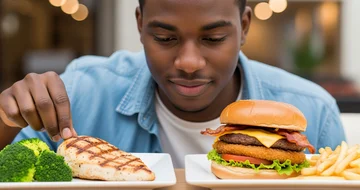
GLP-1 drugs have drawn intense media attention for their potential appetite-suppressing effects on food and beverage consumption, though the article questions whether restaurant operators may be overe

95 stories · last 30 days by relevance
GLP-1 drugs have drawn intense media attention for their potential appetite-suppressing effects on food and beverage consumption, though the article questions whether restaurant operators may be overe

Tiered menu pricing programs may be losing effectiveness as saturation sets in, signaling that restaurants could need to recalibrate their value positioning strategies.

Nearly half of U.S. diners switched their favorite restaurant last year, up from 33 percent the prior year—a shift that signals growing customer volatility and potential vulnerability in restaurant lo
Nation's Restaurant News reports on restaurant industry headwinds including mass closures and job losses, alongside Jersey Mike's planned IPO and recent employment data.
Jersey Mike's ranks highly on the ACSI customer satisfaction index, attributed to its fresh ingredients and made-to-order sandwich model.
A QSR Magazine analysis suggests that GLP-1 drugs' effect on restaurant sales involves nuances beyond simple demand reduction.

Quick-service restaurant traffic declined 4.4% in May, signaling softer consumer demand in the sector.
Grocery stores are emerging as a competitive threat to fast food, suggesting a shift in how consumers choose between convenience and prepared meals.
Grocery retailers are expanding prepared meal offerings, creating new competitive pressure on traditional fast-food chains.
The restaurant sector is not following a K-shaped recovery pattern, suggesting broader economic divergence among operators may differ from expectations.
Restaurant Brands International's Burger King and Popeyes units gained U.S. traffic share relative to McDonald's and Wendy's in late June, even as the broader QSR sector faced headwinds—suggesting the
Restaurant chain closures have accelerated, with the share of chains shuttering 10% or more of locations nearly doubling since 2023, mirroring pre-pandemic closure patterns.

Restaurant chains have faced pressure to maintain profitability as consumer purchasing power diverges, with most struggling to manage cost increases since 2021.

A growing share of major U.S. restaurant chains closed 10% or more of their locations last year, suggesting heightened operational or financial stress across the industry.

Recent data shows continued weakness in fast-food traffic and consumer spending, signaling ongoing pressure on restaurant sales momentum.

Placer.ai traffic data reveals weak spring comp trends — consumer bifurcation (gas prices, income splits) is fragmenting performance across chains and requires targeted recovery strategies.
A Bain report finds consumers plan to cut restaurant spending and view grocery as a key competitor, signaling that operators need to strengthen value positioning to justify dining-out costs.
Fast-food sandwich chains are losing market share to fast-casual competitors, suggesting that consumers may be prioritizing perceived quality and business sustainability over traditional quick-service
Casey's, a Des Moines-based chain, is gaining share in pizza and wings through everyday low pricing, suggesting a potential competitive advantage in value-focused positioning.

A new catering market report analyzes transactional data from over 100 restaurant brands and 8,000+ locations representing more than $1 billion in annual catering volume, offering insights into 2026 c

Cracker Barrel's traffic recovery outpaces expectations and signaling resilience; supply-chain beef pressures emerge as shared cost headwind — early wins and structural inputs matter equally to margin
Richmond restaurants are facing pressure from rising costs and declining customer traffic.
Yelp's 2026 data shows fast casual brands like 7 Brews, Dave's Hot Chicken, Cava, and Chipotle leading growth, with consumers gravitating toward customizable menus, drive-thru beverage concepts, and b

Placer.ai released its June 2026 mall traffic index, tracking retail foot traffic momentum as the year progresses.
A report indicates quick-service restaurants are receiving higher citation shares than fast-casual chains in AI search results.
Revenue management piece on hidden leaks in comp-set analysis — relevant for multi-unit operators rethinking how they benchmark and optimize pricing strategy.

Restaurant transactions in US World Cup host cities saw a significant lift during group stage play, suggesting major sporting events drive measurable foot traffic to dining venues.

A study by Clarify Capital finds that most restaurants operate with minimal cash reserves despite profitability, with over half of owners regularly forgoing personal income to cover operational needs—
A study found that fast food remains cheaper than casual dining on a per-item basis, though delivery fees narrow the price advantage.

Restaurants are increasingly using rebates and procurement oversight to manage profitability as traditional margin strategies become more constrained.

Chef Michael White and attorney Bruce Bronster co-founded BBianco Hospitality Group in 2020, suggesting a shift toward exploring pricing strategy as a margin lever distinct from operational efficiency
A California privacy bill may reshape how restaurants collect and use customer data in loyalty programs, signaling potential compliance costs for chains operating in the state.
Nation's Restaurant News has published its 2026 ranking of the 50 largest restaurant chains in America.
Gen Z dismisses fast casual as 'slop' yet remains the segment's most loyal and demanding customer base, signaling a paradox between casual attitude and sustained purchasing behavior.
McDonald's Q1 headwinds analysis reveals category-wide traffic and pricing pressures affecting even the largest QSR.

New data links workplace meals to higher productivity, employee retention, and office return rates, signaling a catering growth opportunity for restaurants willing to serve corporate clients.

The restaurant industry is in its weakest state since the Great Recession, making incremental improvements to sales or operations newly significant.

A Toast survey of 1,466 U.S. adults found that 64% of guests discovered new restaurants in 2025, suggesting diners are increasingly balancing exploration with loyalty to established favorites.
A new fast food chain has become the No. 1 ranked restaurant, displacing Chick-fil-A from the top position.
Black Box Intelligence published a summary of restaurant industry trends observed in May 2026.

Fast food maintains roughly half the price of casual dining, but delivery markups are obscuring this gap for consumers ordering online.
Fresh tomato prices dropped 8.5% month-over-month in May but remain 32% above year-ago levels, suggesting sustained cost pressures for restaurant operators despite recent relief.
Darden's premium brands and LongHorn are contributing to its 2025 performance.

MRM's research roundup covers multiple industry trends including World Cup revenue impacts, summer hiring patterns, tipping behavior, cottage cheese's resurgence in restaurants, and Yelp's 2026 fastes
Q1 performance analysis of two major franchise platforms shows flagship brands and fast-casual concepts driving growth in a mixed macro environment.

Retail foot traffic shifting to evening/weekend windows — multi-location operators should monitor daytime labor and daypart mix strategy against traffic trends.
.avif)
Jersey Mike's recently ranked highest among fast-food chains on the American Customer Satisfaction Index, a position previously held by Chick-fil-A, signaling a potential shift in how customers percei
Q1 performance analysis of a major fast-casual chain offers insights into 2026 dining trends and consumer behavior for operators benchmarking their own results.
.avif)
Foot-traffic data confirms Chick-fil-A's expansion is driving sustained customer visits — a benchmark for QSR growth strategies.