Wide Open Country
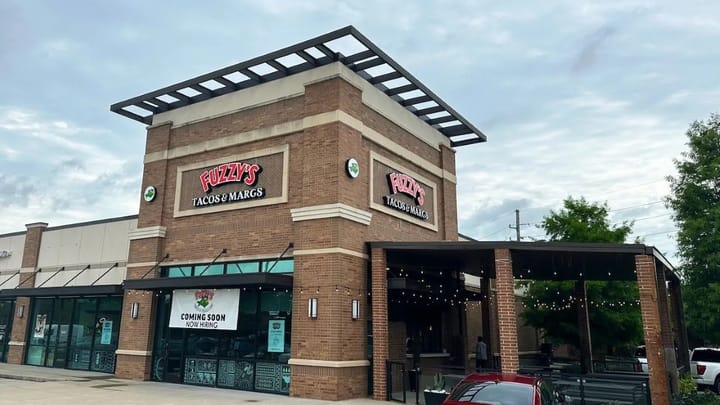
Popular Restaurant Chain Shuts Down Amid Cyclosporiasis Outbreaks
A popular restaurant chain has closed following cyclosporiasis outbreaks linked to its locations.
941 stories · last 30 days by relevance
A popular restaurant chain has closed following cyclosporiasis outbreaks linked to its locations.
Happy Belly Food Group promoted Ian Thomas to Chief Financial Officer amid ongoing franchise expansion.
HTeaO has appointed Brian Wise as Chief Executive Officer.
Single-market closure after a recent format test; minimal signal for multi-location chains beyond format risk validation.
A restaurant operator shares ten profit-improvement strategies from his own restaurant experience, covering sales, costs, staffing, and guest experience.
TouchBistro launched TouchBistro One, an all-in-one handheld device that integrates ordering, payments, and receipt printing; the consolidation of these functions signals a shift toward reducing the n
The FDA has ordered food-ingredient disclosure while postponing stricter ultraprocessed food regulations that were being pursued by RFK Jr.
Wendy's reported declining same-store sales last quarter, El Pollo Loco is considering making a chicken tender item permanent, and Sweetgreen faced a Cyclospora outbreak that set back its recovery eff
Burger King showed momentum, Outback Steakhouse advanced its turnaround in Q2, while Papa Johns' Toy Story promotional campaign underperformed.
Independent restaurant owners lack access to the real-time business intelligence tools that chain managers routinely use, relying instead on manual competitor research and intuitive forecasting.
McDonald's and Dave & Buster's have both announced leadership changes amid challenging market conditions, while a new food-safety investigation has begun in the broader industry.
Passive franchise ownership, promoted as a low-effort income model, carries risks to customer experience, employee welfare, and business sustainability according to franchise industry analysis.

Topgolf's new CEO David McKillups, appointed in February, is driving business changes at the golf-centric eatertainment concept, signaling potential strategic shifts in how the brand positions its foo
A foodservice pricing compliance expert outlines best practices for multi-distributor environments, signaling that negotiated pricing gaps may be a widespread operational issue worth auditing.
Founder-led M&A advice highlighting common negotiating pitfalls — useful for independent and franchise-growth brands considering exits or acquisitions, but generic to restaurants.

Gen Z's preference for shrimp paired with demand for quick, convenient meals is creating an opening for food brands to market simplified preparation and cooking guidance to younger consumers.
Restaurant operators are tracking digital customer touchpoints like app usage, online ordering, and loyalty participation, suggesting in-store audio represents an emerging engagement channel they may
Generic franchising explainer — value only if your brand is actively planning multi-country growth and needs a framework.
Collectible drinkware merges loyalty/engagement with sustainability — a tactic more common in sports/entertainment than QSR, limited signal for broader multi-location strategy.
Generic SMS tool roundup lacking restaurant-specific strategy or brand case studies — vendor-style listicle with minimal operator insight.
Rove, a loyalty program, now operates across 2,000 restaurants and offers up to 14 miles per dollar, instant gift card rewards, and a new app feature.
Texas Roadhouse was targeted by a hoax; the incident appears among broader discussions of McDonald's challenges and independent restaurant spending trends.

Gimbap restaurants have contracted for 31 consecutive months, with franchisees closing locations due to financial losses, suggesting sustained weakness in the category.
Demand for turnkey restaurants has surged significantly as the secondary franchise market grows, suggesting renewed operator interest in ready-to-run concepts.
As restaurants increasingly adopt AI and automation, the sentiment expressed here signals that operators should weigh efficiency gains against diner preferences for authentic, human-centered experienc

Guzman y Gomez saw profit growth but faced challenges expanding in the U.S. market.
A PAR Technology survey indicates restaurant operators are increasingly adopting AI tools, suggesting the technology is moving from experimental to operational use in the sector.
FDA enforcement is accelerating alongside stricter state regulations and supplier requirements, signaling that food brands face mounting compliance risks across multiple jurisdictions.
Slutty Vegan is pursuing franchise expansion one year after an ownership dispute, signaling a potential shift toward asset-light growth models in the vegan fast-casual segment.
THC beverages represent a potential foodservice category worth $1.6 billion, though federal restrictions and a December regulatory deadline create uncertainty for restaurant operators considering entr

Taylor Farms supplies produce to multiple restaurant chains and retailers beyond Taco Bell, signaling the breadth of its role in the foodservice supply chain.
Peanut butter is seeing a surge in new food and beverage product launches, driven by consumer nostalgia for comfort food and demand for protein-rich options.

Multiple restaurant chains including Prêt à Manger, Bojangles, and Culver's are featuring sandwiches prominently in recent menu updates, signaling continued competition for share in the sandwich categ

Equipment vendor event announcement — marginal relevance unless specific kitchen automation or POS integrations are detailed in the actual event.
A chain restaurant's cashless payment policy has drawn customer backlash, with some vowing not to return.
Data quality matters more than model sophistication for restaurant AI — operators should focus on first-party data collection, not just technology.
Salad & Go has closed, McDonald's growth to 50,000 units faces delays, and Dine Brands reported mixed second-quarter results.
Seasonal menu refresh with LTO cocktails and Build Your Own Mimosa — tactical promotion without chain-level strategy or performance data.

General influencer marketing advice for food brands — not specific to restaurant chain operations or strategy.
McDonald's loyalty program collected extensive personal data on a journalist, including game prizes and predictive visit forecasts, illustrating the scale of customer tracking that modern QSR loyalty

Industry analysts discuss potential impacts of Super El Niño weather patterns on food production and pricing, signaling heightened attention to climate volatility as an operational risk factor.
Quick-service chains including Domino's, Chick-fil-A, and McDonald's have introduced new menu items, alongside product launches across A&W, Arby's, IHOP, Krispy Kreme, and Sweetgreen.

A Harris Poll survey found that 68% of Gen Z adults view going out as not worth the cost, signaling potential headwinds for on-premise venues targeting younger consumers.
Routine roundup of seasonal LTOs across multiple segments — no material strategy or performance signal for operators.
Franchise success during economic downturns depends on strong franchisor support, vendor relationships, and clear communication—preparation the author emphasizes based on experience entering the franc

Placer.ai's July 2026 retail and dining index shows retail outperforming dining traffic.

Dan Simons built Founding Farmers from a co-founded restaurant group in Washington, D.C. into a diversified operation spanning dining, catering, spirits, and coffee, now employing about 1,500 people a
Restaurant leaders are deploying AI to accelerate customer service responses, analyze customer sentiment across locations, and redirect staff toward higher-value hospitality work—signaling a shift tow
Trend spotting on a single ingredient — useful for menu innovation but lacks data on which chains capitalized or operator ROI.

New Jersey restaurants must shift to a request-only model for plastic utensils and condiment packets starting August 1st, signaling states' growing regulatory pressure on operators to reduce single-us