Taco Bell revs up drive-thru AI deployment
Taco Bell is expanding AI-powered voice ordering in its drive-thrus through a partnership with Omilia, which already operates in nearly 900 U.S. restaurants, signaling continued industry momentum towa

88 stories · last 7 days by relevance
Taco Bell is expanding AI-powered voice ordering in its drive-thrus through a partnership with Omilia, which already operates in nearly 900 U.S. restaurants, signaling continued industry momentum towa

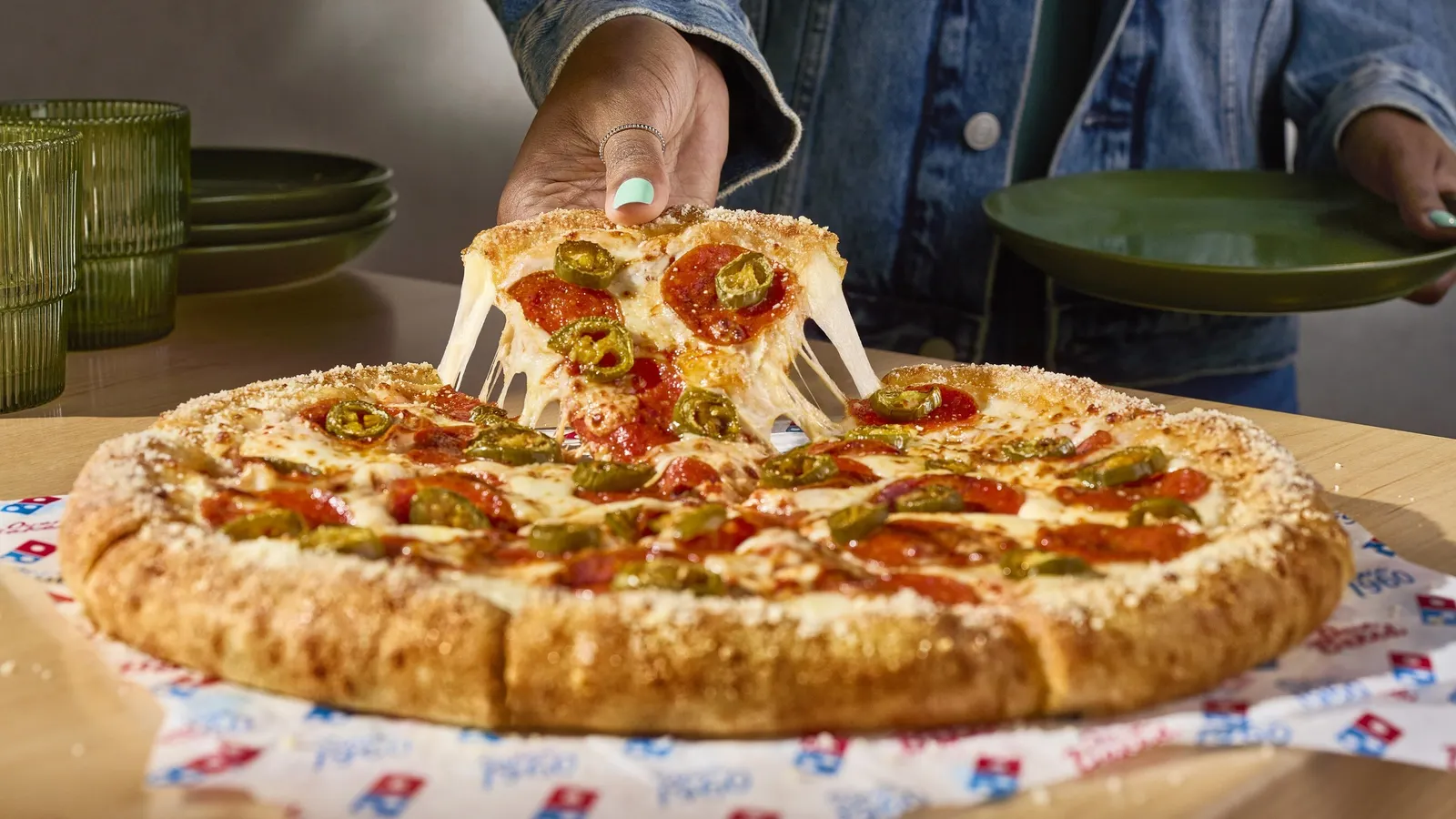
Domino's Pizza is expanding its presence in China.

Golden Chick is launching a new marketing campaign, loyalty program, and digital-first strategy to compete in the competitive chicken tender category.

GLP-1 drugs have drawn intense media attention for their potential appetite-suppressing effects on food and beverage consumption, though the article questions whether restaurant operators may be overe

Audivi AI has released a new pricing model designed to make drive-thru automation more accessible to quick-service restaurant operators.
Despite access to unprecedented guest data, restaurants struggle to retain customers, suggesting that loyalty programs alone may not drive repeat visits without translating data into personalized expe

Tiered menu pricing programs may be losing effectiveness as saturation sets in, signaling that restaurants could need to recalibrate their value positioning strategies.

Nearly half of U.S. diners switched their favorite restaurant last year, up from 33 percent the prior year—a shift that signals growing customer volatility and potential vulnerability in restaurant lo
Nation's Restaurant News reports on restaurant industry headwinds including mass closures and job losses, alongside Jersey Mike's planned IPO and recent employment data.
Jersey Mike's ranks highly on the ACSI customer satisfaction index, attributed to its fresh ingredients and made-to-order sandwich model.
Dutch Bros reports 74% rewards penetration among customers, with the company attributing boosted transactions and digital engagement to its loyalty program; the metric signals rewards programs' growin
Fast food chains are leveraging collectible cups and limited-edition merchandise to drive loyalty while menu prices have climbed significantly since 2019, signaling an industry strategy to offset cost
A QSR Magazine analysis suggests that GLP-1 drugs' effect on restaurant sales involves nuances beyond simple demand reduction.
Wendy's is investing in digital sales, AI-powered ordering, and menu innovation to address weak customer traffic.
Starbucks' loyalty program, personalization features, and faster service are cited as drivers of higher store traffic and customer engagement.

Eric Knott, who scaled PDQ as COO before becoming CEO of Kansas City-based Tiki Taco, joined Restaurant Tech Trends to discuss growth discipline learned from both successes and failures.
Quick-service restaurant traffic declined 4.4% in May, signaling softer consumer demand in the sector.
Quick-service restaurants are receiving a higher share of citations in AI search results compared to fast-casual chains.
Ben Leventhal's Blackbird Labs tackles independent-restaurant invisibility and profitability through frequency-driven loyalty — a template applicable to multi-unit brands rethinking guest retention.
Grocery stores are emerging as a competitive threat to fast food, suggesting a shift in how consumers choose between convenience and prepared meals.
Labor scheduling is moving to AI — the trade headline signals cost pressure and tech adoption spreading across QSR.
Restaurant operators are adopting voice AI technology to capture phone call data as a way to recognize and engage customers across locations, suggesting the phone channel may become a key loyalty and

Grocery retailers are expanding prepared meal offerings, creating new competitive pressure on traditional fast-food chains.
The restaurant sector is not following a K-shaped recovery pattern, suggesting broader economic divergence among operators may differ from expectations.
Fuzzy's Taco Shop is running a summer promotion through August 30 featuring limited-time menu items, rewards offers, and events designed to drive repeat visits and engagement during peak season.

Restaurant technology adoption remains a critical challenge; even sophisticated software fails to deliver value without consistent team engagement, according to a discussion with Decision Logic's CEO
Restaurant Brands International's Burger King and Popeyes units gained U.S. traffic share relative to McDonald's and Wendy's in late June, even as the broader QSR sector faced headwinds—suggesting the
GoTab has acquired Fishbowl, a guest marketing and loyalty platform, to expand its restaurant commerce ecosystem that includes POS, ordering, payments, and mobile solutions.
MarginEdge added real-time cost management, AI forecasting, and back-office automation capabilities to its platform.
Skyline Essentials launched SkAI, an AI forecasting platform designed to help independent and multi-unit restaurant operators predict revenue and labor costs—capabilities historically available mainly

Domino's is distributing $1 million in rewards to loyalty members following a penalty card issued to U.S. soccer player Folarin Balogun during a World Cup match, triggering a promotional commitment th
Restaurant brands are increasingly centering their apps around loyalty programs, personalization, and direct customer engagement rather than just order-ahead convenience, signaling a shift toward usin
MashMore Potato introduced an AI operating system it says is reducing management workload at its Albany location; the company frames this as a step toward making its model more scalable and software-d
Commerce media platforms struggle with measuring ad impact due to probabilistic attribution and modeled incrementality, but in-store data offers a potential solution to verify whether digital ads tran

Fast-food sandwich chains are losing market share to fast-casual competitors, suggesting that consumers may be prioritizing perceived quality and business sustainability over traditional quick-service
Richmond restaurants are facing pressure from rising costs and declining customer traffic.
Placer.ai released its June 2026 mall traffic index, tracking retail foot traffic momentum as the year progresses.
Restaurant transactions in US World Cup host cities saw a significant lift during group stage play, suggesting major sporting events drive measurable foot traffic to dining venues.

Revenue management piece on hidden leaks in comp-set analysis — relevant for multi-unit operators rethinking how they benchmark and optimize pricing strategy.

A report indicates quick-service restaurants are receiving higher citation shares than fast-casual chains in AI search results.
Chef Michael White and attorney Bruce Bronster co-founded BBianco Hospitality Group in 2020, suggesting a shift toward exploring pricing strategy as a margin lever distinct from operational efficiency
A podcast episode explores how restaurants can use guest recognition and personalization technology to improve customer loyalty, addressing what the source frames as widespread guest retention challen
McDonald's Q1 headwinds analysis reveals category-wide traffic and pricing pressures affecting even the largest QSR.

A Toast survey of 1,466 U.S. adults found that 64% of guests discovered new restaurants in 2025, suggesting diners are increasingly balancing exploration with loyalty to established favorites.
Loyalty program seasonal offer — vendor/brand content marketing without operator takeaway on program structure, ROI, or enrollment trend.

Fresh tomato prices dropped 8.5% month-over-month in May but remain 32% above year-ago levels, suggesting sustained cost pressures for restaurant operators despite recent relief.
Darden's premium brands and LongHorn are contributing to its 2025 performance.

Q1 performance analysis of two major franchise platforms shows flagship brands and fast-casual concepts driving growth in a mixed macro environment.

A 2026 survey finds 22% of diners use AI for restaurant recommendations, yet 83% of restaurants don't appear in AI responses, signaling that most operators lack the verified data infrastructure needed